
Multi-Age Learning at Our Co-Op: Why It Works (and Why Kids Thrive)
One of the greatest strengths of a homeschool community is something families often don’t realize they’re craving until they experience it: a mix of ages learning together.
In many traditional school settings, kids are grouped narrowly by age, and they spend most of the day with same-age peers. Multi-age learning is different! More like real life, like a family, and more supportive for a wider range of learners.
Maria Montessori built her classrooms around multi-age groupings because she observed that children learn in developmental “planes”. Montessori classrooms commonly use age spans (often three years), which creates built-in mentorship, collaboration, and differentiated learning.
What Montessori noticed about mixed-age groups
Montessori education is known for multi-age learning for a reason: it consistently leverages the natural learning dynamics that happen when children aren’t all at the exact same stage.
The American Montessori Society summarizes it this way: younger children learn through observing older peers, and older children reinforce mastery by teaching and developing leadership. The overall environment tends to foster cooperation…and this is something we absolutely see at RHSA!
Why multi-age learning benefits kids (academics + character)
Younger kids stretch upward naturally
When younger students regularly see older students reading, writing, presenting, asking thoughtful questions, or managing a project, it creates a gentle pull upward. It’s motivating without being pressure-filled.
Older kids gain leadership opportunities
Older students often grow in confidence when they realize they can help, contribute, and model maturity to the younger crowd. Montessori frameworks explicitly value this reinforcement-through-teaching dynamic as a way older students deepen understanding and build leadership skills.

Social dynamics are often healthier
Mixed-age classrooms can reduce the “pecking order” intensity that sometimes happens in tight, same-age groups. Research in mixed-age elementary classrooms has found increases in prosocial behavior and lower aggression, with some effects persisting later.
Kids learn to connect with each other more easily
Some children naturally connect best with kids a year or two older (or younger). Multi-age spaces widen the social net, which can reduce feelings of not fitting in.
It supports a wider range of learning speeds more quietly and kindly
One of the underappreciated perks: kids can move at a pace that fits them without it being labeled. Mixed-age models often emphasize flexible grouping and more individualized progress over constant comparison.
What multi-age learning looks like in our co-op
In our co-op, multi-age learning typically looks like this:
Teacher-led instruction with flexible levels: one lesson topic, but assignments scale by readiness (not just age).
Small-group rotations: students move through stations (hands-on activity, discussion, independent work), with different expectations by level.
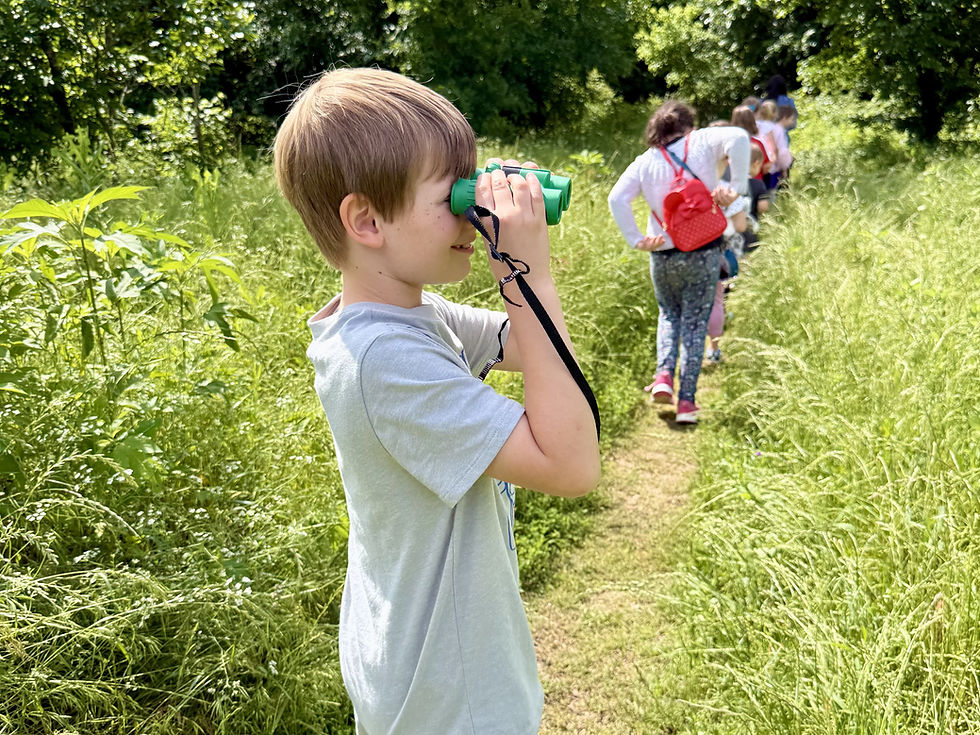
Peer modeling built into the room: younger students observe how older students participate and manage their work.
Leadership opportunities for older students: older kids might mentor, demonstrate, or support group projects without carrying responsibility that belongs to adults.
A culture of respect and patience: kids learn to collaborate across ages, which mirrors real families and real communities!
In other words: the older kids aren’t held back and the younger kids aren’t being dragged along. Everyone has a meaningful role.

Why parents love this (especially when homeschooling multiple kids)
Multi-age learning tends to support what most homeschool parents are already doing at home:
teaching multiple children in one household rhythm
letting kids progress in different subjects at different speedsnormalizing that learning doesn’t have to be identical to be “right”
It reduces the feeling that you need separate, siloed environments for each child to thrive. For many families, it creates a sense of confidence and encouragement to keep going.
Ready to learn more about our co-op?


Comments