
Take Your Homeschool Outside
The benefit of adding nature experiences to your weekly rhythm (and how RHSA supports it)
Homeschooling gives you something many families crave: flexibility. And one of the simplest (and most powerful) ways to use that flexibility is to move learning outdoors on purpose- not just as an occasional “field trip,” but as a steady part of your weekly rhythm.
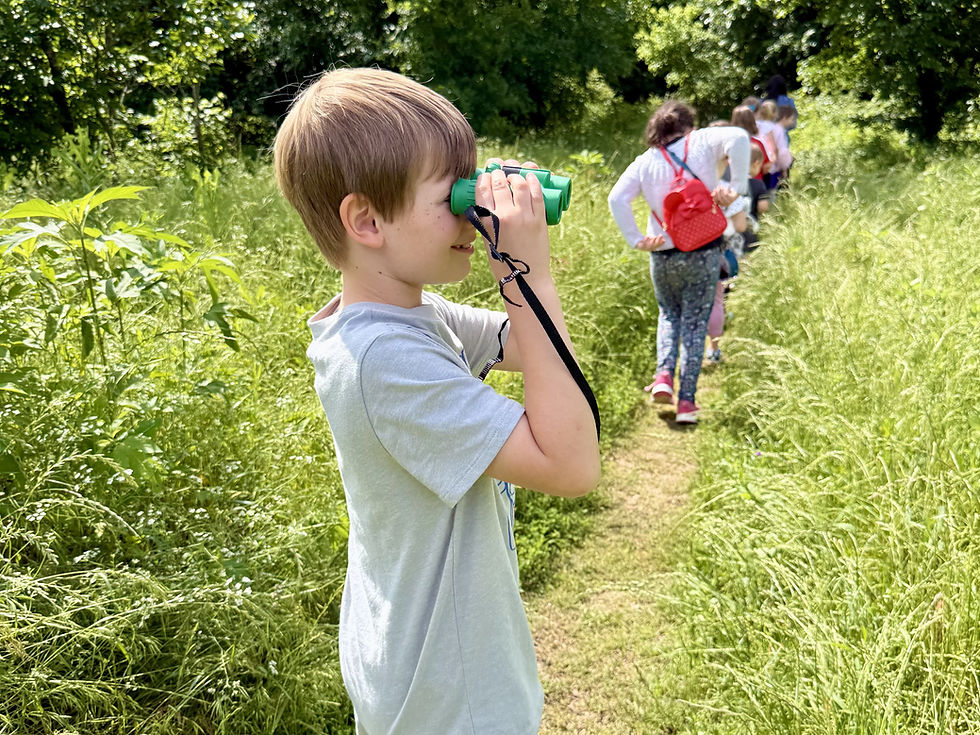
At RHSA, we love the way nature brings a homeschool community to life. You’ll see it in the everyday moments: families spreading out for lunch outdoors, kids running and exploring between classes, and even teachers taking lessons outside when the weather is right. We also host nature-oriented Lunch & Learns so students can interact with real-life experts and experiences that make learning stick.
Whether you’re already outdoorsy or you’re just trying to make homeschool feel a little more sustainable, adding nature time to your week can have a surprising impact.
Why nature belongs in your homeschool rhythm
Nature supports focus and learning stamina
Many kids concentrate better after time outdoors. Movement, fresh air, and open space give the brain a reset- especially for children who struggle with wiggles, distractibility, or frustration during seatwork.
Nature isn’t a break from learning. It’s often the thing that makes learning possible afterward.
Try this: a 15-20 minute “outside reset” before math or writing (the subjects that tend to require the most focus).
It strengthens emotional regulation (for kids and parents)
Weekly nature time gives kids a built-in outlet for stress, big feelings, and sensory overload. Outdoor play and exploration can calm the nervous system and help kids return to their work more regulated.
And it helps parents too. If homeschool sometimes feels like a pressure cooker, stepping outside can be the quickest way to soften the intensity and reconnect.
Try this: when the day feels off-track, trade “push harder” for “go outside first.”
Nature builds curiosity without you having to manufacture it
Outdoors, questions happen naturally:
Why are these leaves different shapes?
What made this trail muddy here but dry over there?
What kind of bird is that?
Why do we see more bugs after rain?
This kind of curiosity-based learning is one of the hidden superpowers of homeschooling- because it turns your child into an active learner, not a passive one.
Try this: keep a small notebook for “wonder questions.” Look up just one later that day.
The outdoors is a real-life science lab
You don’t just need elaborate experiments to teach science concepts. Nature is full of living lessons in:
weather and seasons
ecosystems and habitats
plant life cycles
insects and pollinators
erosion, rocks, and water flow
At RHSA, this shows up in simple, memorable ways. Some classes step outside to observe, sketch, measure, collect data, or simply experience concepts in a hands-on way. And our Lunch & Learns bring the natural world to students through interactive presentations, making science and stewardship feel personal and relevant.
It makes homeschool feel more connected and joyful
When families look back on their homeschool years, they rarely remember the worksheet that finally “clicked.” They remember the rhythm: the mornings together, the read-alouds, the park days, the co-op friendships, the conversations on the way home.
Nature time builds that kind of memory-making into your week! It can become a shared family culture: We’re the kind of family that gets outside.
And at RHSA, outdoor time is part of the culture. We encourage students to eat lunch outside when possible, to play and decompress in fresh air between classes, and to see learning as something that can happen beyond four walls. We also plan multiple nature-based field trips throughout the year!
What “nature experiences” can look like (no perfection required)
Nature time doesn’t have to mean a state park (of course, it can!) and a packed lunch. It can be:
a neighborhood walk
a local trail
time at a playground with trees and open space
gardening in the yard or pots on the porch
a blanket in the grass with read-aloud time
nature scavenger hunts
sketching, watercolor, or journaling outdoors
RHSA is cheering you on
Homeschool rhythms can be hard to sustain alone. Community helps. When nature time becomes part of your larger homeschool culture- outdoor lunches, field trips, friends to roam with, classes that occasionally step outside, and Lunch & Learns that bring the natural world to life- it’s easier to keep showing up.
At RHSA, we encourage families to build lives that feel rich, grounded, and connected. Taking your homeschool outside isn’t just about learning science or burning energy, it’s about shaping childhood and cultivating wonder.


Comments